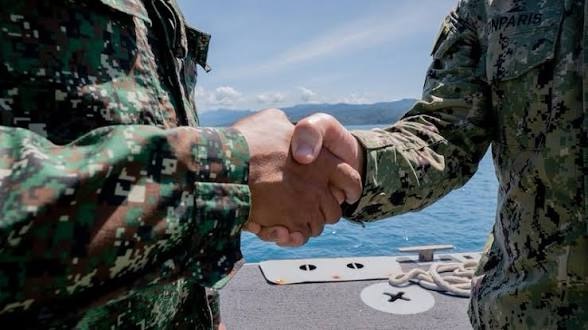
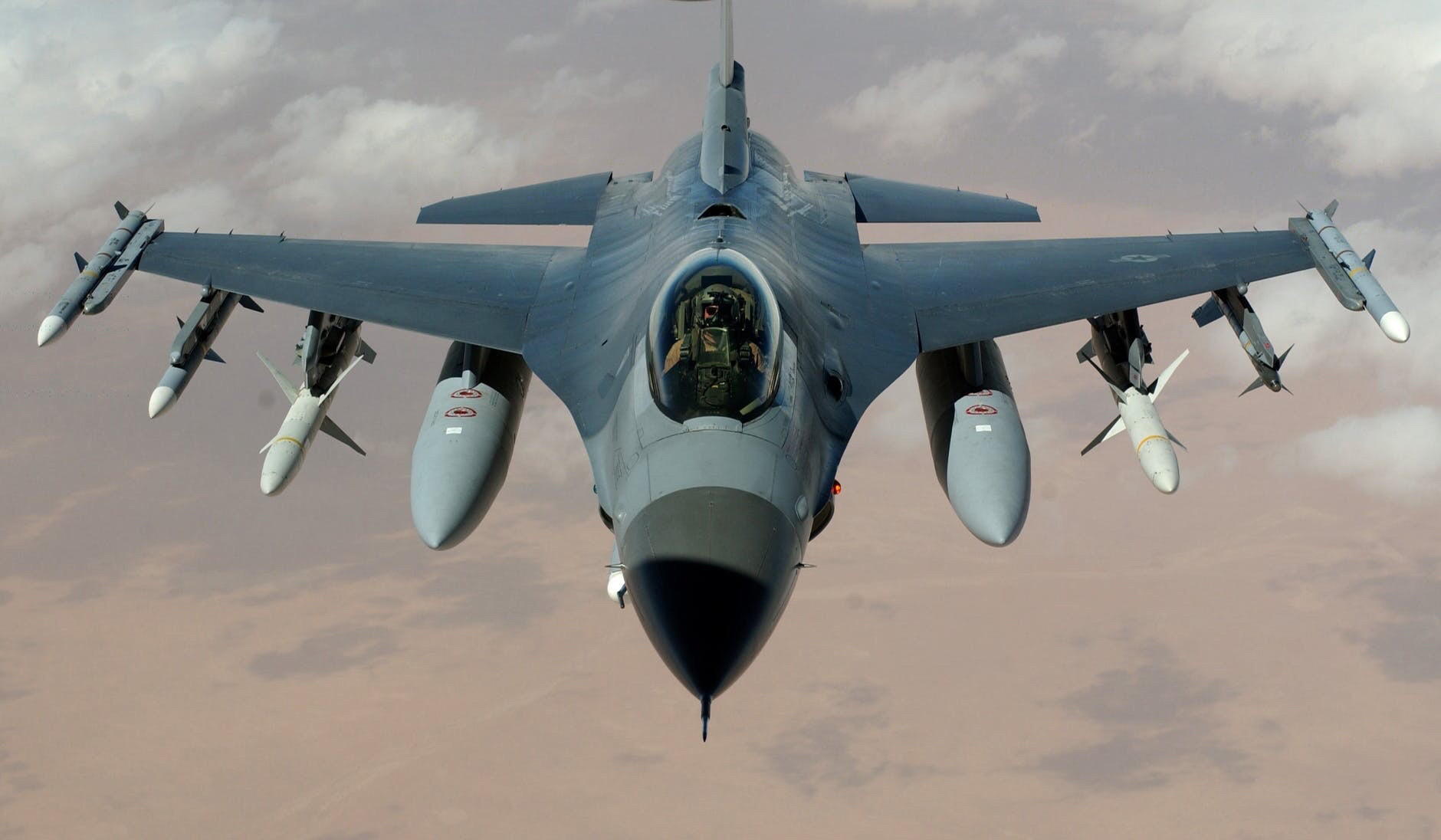
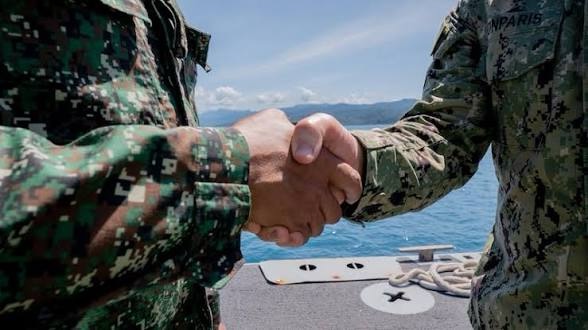
Pax Silica is a new concept that has recently been developed via a United States-led economic and security coalition. Technological interoperability is at the heart of strategies to oppose Chinese aggression in the IndoPacific region. The State Department led meetings in Washington, DC started in December 2025 with seven nations signing a Pax Silica Declaration to mutually secure global supply chains for advanced technologies, including artificial intelligence (AI), semiconductors, and critical minerals.
A key concept is Quantum Supremacy or, in other words, the advantage of quantum computing over classical supercomputers.
Quantum supremacy refers to the moment where a quantum computer solves a problem that no classical supercomputer can finish in any practical manner without taking an exponential number of years. In 2019, Google claimed to have created Quantum hardware that could outperform traditional computers on a specific task. The catch is that the specific task in Google’s demonstration had no immediate real-world use.
Definition: Quantum Supremacy is defined as physical superiority of quantum computing over classical limits. Classical computing uses on and off switches, whereas with quantum computing a switch can be off and on at the same time. The mysterious phenomenon of quantum entanglement underlies the ability to correct errors resulting from the degree of randomness that results from the ambivalence of a switch being on and off at the same time.
Entanglement: Qubits (similar to a bit but indicating a unit of quantum information) simultaneously process huge amounts of data at the quantum level — particles that exist at the subatomic level. Classical computers work by tracking bits sequentially. In 2019, Google announced it had achieved Quantum Supremacy using their 53-qubit Sycamore processor for a random sampling task.
In 2010, China initiated previous trade restrictions, Rare-earths have grown in importance in a variety of supply chains; according to Reuters, China’s latest restrictions might cause more damage to Japan’s economy than China’s 2010 efforts to intimidate Japan.
Corporate notices about critical minerals are signaling trouble ahead for Japanese industries that depend on Chinese rare-earth products. Japan’s pain, however, may not be commensurate with CCP frustration towards Japan’s leadership in the developing coalition of nations prepared to stand with Taiwan, the Philippines and other U.S. allies.
Symbol of Philippine national Pride. The Carabao symbolizes, strength, power, efficiency, perseverance and most of all, hardwork. Philippine president Emilio Aguinaldo declared the Carabao a national symbol due to its aid in the First Philippine Revolution.
China reported no exports to Japan of terbium or dysprosium oxide from November through May and minuscule shipments of yttrium oxide since December, cutting off supplies critical to making powerful magnets. Tokyo is working with Australia, the U.S. and other nations to develop alternatives and also has products on which the Chinese economy depends. Japan is investing alongside the U.S. and other allies to secure supplies of rare-earths and other strategic minerals. Australia and the Philippines are two nations in which such resources have been identified. But developing infrastructure for mining and processing rare-earths will take many years.
Takaichi signed a framework with U.S. President Donald Trump in October to stockpile critical minerals and rare-earths. Mining of deep-sea deposits remains in the distant future.
The Group of Seven nations has agreed to do more to coordinate stockpiles, and Japan has rare-earth recycling projects in progress.
“I assume that a year of export restrictions will create big problems and we’re four to five months into that. Obviously, the government wants to keep the issue under wraps so as not to cause panic and give China the early win.”
Yuriy Humber, CEO of Tokyo-based Yuri Group, a consultancy.
China’s economy is hurting. Japan and the U.S. have not even begun to feel the pain. Nevertheless, the global economy is decoupling and the pressure will be on Europe and other industrial nations to restrict trade with China. China will ratchet up its sanctions and continue provoking low-level confrontations such as regular law enforcement patrols East of Taiwan. And China has violated territorial rights within the Exclusive Economic Zones of various sovereign nations. Testing ICBM missiles within Japanese airspace is serious enough to challenge Japan’s national security without provoking a full scale war. Claiming islands in the South China Sea and the Philippines as Chinese territory creates a sense of normalcy to China’s expansive ambitions.
China’s newest claim is that the Philippine Island of Batanes belongs to China. China has experts claiming that Batanes belongs to China
Batanes is an island close to Taiwan—and therefore strategically located for launching missiles in defense of Taiwan. Although a Chinese invasion of Taiwan is anticipated to expand into the Philippines, there is no basis in history or international law for the claim that Batanes has historically belonged to Taiwan; nor is there any recognition from the international community that China has any claim to Batanes.
🇵🇭 Reality Check: Batanes has been an integral part of the Philippines for centuries. The Ivatan people are Filipino—not subjects of Beijing. No treaty, map, or internationally recognized legal instrument grants China sovereignty over Batanes.
China already lost its sweeping maritime claims against the Philippines. The 2016 South China Sea Arbitration tribunal unanimously rejected the legal basis for Chinese claims in the South China Sea. Inventing new claims over Batanes exposes the desperation behind propaganda allegedly spewed by CCP apparatchiks in China’s academic community.
A series of agreements involving the United States and several other nations has become the key to containing potential Chinese aggression. The developments encompassing several international agreements spanning many years have been compared to a NATO Treaty for the Indo-Pacific region. One such agreement is the Memorandum of Agreement between the United States Department of Defense and the Government of the Republic of the Philippines Department of National Defense; the memorandum concerns Communications Interoperability and Security (CISMOA), entered into force on February 27, 2004.
In 2004, Philippines and the United States had already been focusing on developing their shared security alliance and commitments under the 1951 United States-Philippines Mutual Defense Treaty. The Mutual Defense Treaty commits the two nations to defend against armed attacks on either country’s armed forces, aircraft, and public vessels — including those of their coast guards — anywhere in the South China Sea.
The 1998 Visiting Forces Agreement (VFA), 2014 Enhanced Defense Cooperation Agreement (EDCA), and CISMOA provided a basis for building interoperability not just between the two nations but with other nations up to and including some NATO countries. Japan and Australia in particular, along with India, Taiwan and several other ASEAN countries are significantly impacted by the commitment to interoperability.
What is interoperability and how is it implemented? One significant component of the developing defensive architecture are the commitments from several nations to share mineral supply chains, especially the rare earth metals that are necessary for everything from missile technology and manufacture of electric vehicles to semiconductor production and artificial intelligence.
The fact that China controls the production and distribution of many such raw materials (and products that require rare earth elements) raises the issue of whether any nation can afford to depend on China for raw materials and products. China has already stopped shipments of strategic rare element materials and other products to Japan because Japan refused to bow to Chinese demands.
One result of China’s aggressive stance is increased production of Japanese military arms and naval assets for its own defense and for sale to other countries, including in particular the Philippines. Meanwhile to United States is investing in future operations for mining, refining and sharing of rare earth materials and other metals, some of which are located in Japan, Australia and the Philippines.
After President Trump imposed duties on Chinese imports, Beijing announced export controls against the U.S. on seven rare-earth elements that power communications equipment, aircraft and missiles. How can the U.S. expect to inflict any significant pain required to deter Chinese aggression in the South China Sea (i.e., the West Philippine Sea) when China possesses so much bargaining power? Production of steel, rare-earth elements, and even pharmaceuticals, to name a few, confers China with the ability to inflict massive pain on U.S. economic and strategic military interests. The U.S. has already begun restricting China’s access to advanced semiconductors and other technology necessary for developing artificial intelligence. Although Netherlands and Japan have export controls on such technology, the U.S. needs to press for further restrictions.
Restricting exports of advanced chips is one option for inflicting pain on China. The U.S. and other industrial countries that have seen domestic industries destroyed by China’s aggressive trade dominance also need to coordinate trade measures and stimulate strategically important industries such as shipbuilding, production of steel and mining operations. This is exactly what has been happening between Japan, the Philippines and other U.S. partners as interoperability begins to be implemented. Japan is now expected to build ships in the U.S. and the Philippines.
China’s shipbuilding capability is over 200 times greater than the United States. Lack of shipyard capacity has become a huge liability for the U.S. Navy. Expanding Japan’s world-class shipyards capable of producing sophisticated naval platforms for its navy could also support allied fleets operating in the Indo-Pacific. According to the U.S. Naval Institute, American officials are considering foreign designs and having U.S. warship components built in overseas yards as part of an expansive manufacturing study proposed in the Fiscal Year 2027 budget. Shipbuilding in Japan and the Philippines is being facilitated through cooperation with the U.S. and Australia.
Congress needs to take steps to bring ship building and other industries back to the United States. It looks like Japan will be building ships in the U.S. and the Philippines. Building infrastructure for mining rare earths is going to take many years. The Chinese government has enforced it’s industrial dominance in key categories in order to enhance its own military interests by virtually monopolizing strategically important goods.
Coordinated strategies to curtail Chinese control of strategic resources are needed. For example, Congressional action is required both to increase shipbuilding and restrict shipping companies, insurers, brokers, and banks from supporting shipments that threaten U.S. strategic interests. Progress is already being seen with U.S. naval control over energy trade routes and sharing of intelligence between U.S. partners, specifically in the Indo-Pacific theater of operations. The military action against Iran is bringing many of these issues into focus.
Despite its large oil reserves, China’s steel industry depends on imports of iron ore from Australia. Restricting copper and lithium along with limiting China’s access to cobalt and other materials will deter China from using its own distribution channels to threaten U.S. partners. But only if improved production and distribution of rare-earth elements can be achieved for the U.S. and its strategic partners.
The JS Maya missile destroyer navigates through open ocean waters.
The new defense architecture promotes sharing of intelligence, raw materials, distribution, and mutual defense. The goal is to reduce dependence on the United States and reinforce security for Taiwan which most experts view as linked to security for the Philippines and other First Island Chain nations. Much of what is discussed here is outlined in a Foreign Affairs article entitled The Fault Lines in China’s Power,by Ely Ratner and Nick Danby.
NATO can remain relevant if NATO nations increase defense spending and develop cooperation with nations that recognize the threat of Chinese aggression in the South China sea and beyond the Indo-Pacific region. It is encouraging that some NATO countries are already committing to partnership with ASEAN nations. The days when European governments conduct trade relations with China while refusing to pay for their own defense and ignoring the interests of the U.S. and other U.S. partners have come to an end. Trade needs to be conducted in a manner that is consistent with maintaining interoperability in the Pacific and deterring aggression wherever threats might emerge.
The following interesting update is posted on X regarding the alleged imminent collapse of Beijing’s trade leverage:
During their upcoming July 1–3 summit, Japanese PM Sanae Takaichi and Indian PM Narendra Modi will sign a landmark Joint Declaration on Economic Security Cooperation. The pact creates a powerful defensive front to openly resist economic coercion—a direct response to the CCP’s aggressive weaponization of raw materials and unexpected export restrictions.
To completely insulate vital technologies from political blackmail, the alliance couples Japan’s high-tech semiconductor manufacturing equipment with India’s massive production scale, anchored by developments like the $9.6 billion Tata fabrication hub. To shatter Beijing’s processing monopoly, the deal reinforces critical mineral supply chains through strategic joint ventures, such as the Toyota Tsusho rare earth processing facility in India that exports directly to Tokyo.
Managed under the Japan-India Economic Security Dialogue, the agreement formalizes a rapid-response mechanism against sudden market disruptions. The strategic roadmap systematically secures five priority areas: semiconductors, rare earth minerals, clean energy (like green hydrogen), pharmaceuticals, and trusted ICT networks.
Can this powerful democratic alliance permanently neutralize the CCP’s chokehold on the global tech supply chain?
See @Unveiled_ChinaX
Beijing blacklisted 20 more Japanese tech and defense giants. This latest escalation represents an ongoing and aggressive supply chain blockade. Furthermore, China is attempting to completely strangle Japan’s leadership in the defense of Philippines, Taiwan and other sovereign nations threatened by China’s geopolitical ambitions.
China’s Ministry of Commerce issued announcements cutting off critical civilian-military dual-use exports to major entities. The list now targets the National Institute for Defense Studies, which serves as Japan’s flagship military think tank, alongside specialized advanced component subsidiaries of industrial giants Komatsu, Fujitsu, and Mitsubishi Electric.
China placed another twenty firms, including Mitsui E&S, on a highly restrictive watch list. The CCP claims this is retaliation for Japan’s defense buildup and its strategic stance on Taiwan. By leveraging its monopoly over rare earths and raw materials, Beijing is legally barring global suppliers from sending Chinese-origin parts to these entities without express approval. The CCP is weaponizing trade to isolate America’s strongest ally in Asia. China has initiated steps that will lead to decoupling trading with the U.S. and our economic partners. Many of the Trump administration’s controversial actions — including actions against Venezuela and Iran — are directed toward strategically restraining China’s drive to achieve Indo-Pacific hegemony.
One component of the new strategic architecture is digital & technology security along with intelligence sharing between nations. For example, Japan is engaged in breaking the CCP’s chokehold on the world’s most critical data pipelines. Backed by an initial 8 billion yen investment, Tokyo has initiated a Digital Corridor initiative under Prime Minister Sanae Takaichi’s updated Free and Open Indo-Pacific strategy. The strategy deploys eight critical infrastructure projects alongside Taiwan and India to systematically neutralize authoritarian digital influence.
In Taiwan, Japanese tech leaders like NEC, which commands 25 percent of the global undersea cable market, are hardening submarine cables connecting the two nations. The cables suffer frequent, highly suspicious disruptions.
According to @Unveiled_ChinaX, “the network includes India’s booming data center sector. Tech giant NTT is launching trials of its next-generation Innovative Optical and Wireless Network all-optical technology. Coupled with separate secure financial transaction trials across India and Singapore, as well as remote mining infrastructure tests in Chile, this framework establishes a highly reliable, rules-based alternative to China’s state-controlled Digital Silk Road.”
By securing undersea fiber, next-gen optics, and advanced chip supply chains, Tokyo is ensuring democratic allies dominate strategic development of AI and digital innovation.
Japan recently defended the economic interests of Japan, the U.S. and other nations by implementing a screening mechanism to stop China’s covert operations. Chinese networks use Japan as a backdoor—smuggling advanced Nvidia AI chips to China, routing illicit fentanyl precursors, and compromising Japan Self-Defense Forces networks with state-linked malware.
“To halt this systemic economic coercion by the Chinese Communist Party, the Diet passed sweeping amendments to the Foreign Exchange and Foreign Trade Act. The new framework completely closes the loophole on indirect acquisitions via complex offshore corporate structures and slashes notification thresholds to a razor-thin 1 percent for high-risk foreign buyers.”
See @Unveiled_ChinaX
The Ministry of Finance recently demonstrated it means business by blocking a 1.7 billion dollar foreign acquisition of Makino Milling Machine Company. Manufacturing precision tools used in aerospace and missile defense is critical to the mutual defense of the whole region and Japan’s strategy requires cooperation among all the nations engaged in developing a coordinated defense to imminent Chinese aggression.
Improved intelligence sharing builds a shield protecting allied critical tech supply chains, including U.S. technology. The Trump administration is quietly encouraging such interoperability among nations willing to oppose Chinese hegemony in the Western Pacific.
One of the major themes we deal with on this blog site is national security and related issues. Almost from the beginning of the Trump Administration’s attacks on Iran, there has been intense dissension. Within a short time after the U.S. began carrying out strikes on Iran in coordination with Israel on Saturday, Feb. 28, 2026, the chattering class began questioning why regime change was not happening and why the onslaught against the Iranian regime failed to produce a deal that satisfied all of the Trump administration’s demands. And the Trump Administration allegedly lied because Trump stated previously that all three sites the U.S. hit in June, 2025 had been obliterated. A U.S. intelligence assessment subsequently found that only one of the locations had been destroyed.
Trump Abandoning Taiwan? But an arguably more subtle criticism developed after the President’s trip to China. The usual suspects suggested that Trump and his administration had signaled to Xi Jin Pang that the U.S. is preparing to abandon Taiwan.In 1955, the U.S. had entered into a Mutual Defense Treaty with the Republic of China (Taiwan). The treaty was in effect until 1979 when President Carter recognized Communist China and abrogated the previous recognition of Taiwan. Article 10 of the treaty stipulated that either party could terminate the treaty one year after notifying the other party. The treaty came to an end on January 1, 1980, one year after the United States established diplomatic relations with the People’s Republic of China on January 1, 1979.
Taiwan Relations Act. The U.S. commitment to defend the island of Taiwan from invasion by the People’s Republic of China was replaced by the Taiwan Relations Act of 1979. The existing Taiwan Relations statute does not promise Taiwan direct military assistance in case of an invasion. The policy for many years has been for U.S. foreign policy to remain ambiguous regarding the consequences of Chinese aggression in the Strait of Formosa.
Incidentally, Pres. Carter’s authority to unilaterally annul the U.S. treaty with Taiwan, was the topic of the Supreme Court case Goldwater v. Carter. SCOTUS declined to rule on the legality of this action on jurisdictional grounds, thereby allowing Carter to discard Taiwan as an ally had it not been for the U.S. Congress stepping into the breach with malleable assurances of assistance pursuant to the Taiwan Relations Act.
Trump’s possible intention to delay arms shipments to Taiwan gave rise to accusations that he secretly had agreed with Xi Jinping not to oppose Chinese actions against Taiwan. For example, the Center for American Progress (CAP) announced that the Taiwan alleged arms freeze is a gift to Xi Jinping. By freezing the $14 billion arms package to Taiwan, the Trump administration supposedly was “abandoning historic U.S. commitments, damaging Indo-Pacific deterrence, and inviting Beijing’s aggression.”
In 2008, CAP outlined a progressive approach to U.S. China relations, stating that the next president should concentrate on six policy priorities in U.S.-China relations:
Climate change and energy security
Balanced and sustainable global growth
Enhanced security in the Asia-Pacific region
China’s military modernization
Stability in the Taiwan Strait
Governance and individual rights.
Predictions of Doom for Taiwan. The media reports echo CAP’s dire predictions regarding Taiwan. The problem is that significant news has been almost completely overlooked by the President’s detractors. The Quad is a diplomatic partnership between the United States, Australia, India, and Japan committed to fostering a free and open Indo-Pacific. The cooperation initially began with the 2004 Indian Ocean earthquake and tsunami, which claimed over 225,000 lives across 14 countries. Together, the Quad mobilized 40,000 emergency responders – along with helicopters, cargo ships, and transport planes – to assist affected countries.
Since then, Quad partners have worked together for regional stability and security. The Quad is a diplomatic partnership between the United States, Australia, India, and Japan committed to fostering a free and open Indo-Pacific.
Quad partners have worked together in response to natural disasters and broader challenges to economic prosperity and regional stability and security as a coalition for a free and open Indo-Pacific prepared for “contingencies” that threaten the region. On May 28, 2026, Japan and the Philippines announced an agreement to engage in talks leading up to an agreement to share classified information. Japan has already agreed to allow Tokyo to step up transfers of military equipment to Manila, including warships.
Multinational Security Ties. Tokyo and Manila have been steadily upgrading defense and security ties in response to China’s growing assertiveness in the South China Sea and against Taiwan. Japan’s relaxation of longstanding restrictions on combat equipment exports is a direct result of Trump Administration policies. A proposed weapons transfer pact will allow Tokyo to provide used destroyers to Manila’s navy.
Japan and the Philippines are broadening defense ties between the two nations, which are both treaty allies of the United States. Seventeen countries, including India and Australia, traveled to Paoay, in northwestern Philippines, for an annual combat exercise. The Balikatan military exercise displayed U.S., Philippine, Japanese and Canadian firepower with a mock allied assault sinking a ship about 40 kilometers (25 miles) off the coast.
The story of how the Founding Father of modern China ruthlessly subjugated his own people and set the scene for China’s thrust toward world domination
Signals to China. The message to China is that aggression against Taiwan will be countered with long range fire-power that can reach the Formosa Straight and even the Chinese mainland. Chinese officials have accused the Philippines of allowing countries led by the U.S. to “gang up” against China.
New American, South Korean and Japanese ships. The Philippines is set to receive transfers of American and Japanese vessels to bolster its Coast Guard and Navy fleets operating in the South China Sea. The U.S. is building a network of ammunition hubs throughout the First Island Chain with recent development of Olongapo-Subic Bay resurrecting the former U.S. Naval presence under terms that encompass ship building and other military operations subsidized and/or funded by the United States.
Shangri-La Dialogue. The International Institute of Strategic Studies (IISS) Shangri-La Dialogue in Singapore hosted American and Japanese defense officials who pledged to reinforce Manila’s fleet with recently and soon-to-be decommissioned vessels. The Philippines is involved with several other nations, including the U.S., to modernize forces toward operations aimed at deterring Chinese aggression. The conventional wisdom is that the Philippines is in a strategic location that ties its own defense to the defense of Taiwan.
2012 standoff at Scarborough Shoal. The Philippine Navy and Coast Guard have been supplemented with new South Korean and Japanese maritime assets to offset China’s initial moves in the South China Sea following a 2012 standoff at Scarborough Shoal.
Mutual Defense Treaty. On May 3, 2023, the U.S. Department of Defense (DOD) of the United States of America and the Department of National Defense (DND) of the Republic of the Philippines established Bilateral Defense Guidelines to modernize and strengthen the 1951 United States-Philippines Mutual Defense Treaty’s (MDT’s) continued relevance in addressing current and emerging threats:
● Face emerging regional and global security challenges;
● Coordinate defenses in the region and address primary security concerns; and
● Guide priority areas of defense cooperation to address security challenges of shared concern to the United States and the Philippines.
Although the defense guidelines were promulgated under the Biden administration, recent developments have demonstrated the Trump Administration’s solid commitment to sharing resources between the Quad nations and other countries threatened by China’s ambitions in the South China Sea and Indo-Pacific region.
The destiny of the Philippines nation therefore seems to be closely connected to the fate of Taiwan and other nations aligned with the U.S. in the region. Infrastructure, intelligence, distribution of goods, including military armament and natural resources are all components of the emerging coalition that is solidifying within the Indo-Pacific region.
Japan, Australia and the Philippines all have located substantial deposits of rare earth elements. China stopped sales to Japan of certain metals and products using rare elements in order to intimidate Japan from implementing its industrial and defense strategies. Missiles, electric vehicles and computer technology all require large amounts of rare metals. China presently monopolizes the mining, distribution and production of rare metals.
The United States and other nations are desperately trying to identify sources of these metals but developing environmentally sound methods of mining and refining such materials will take years. Therefore, the U.S. government is expected to subsidize such development both domestically and in other nations, with sharing arrangements that include the Philippines and Japan. Such efforts are closely connected to mutual defense.
The Philippines seems to have a unique role to play in world affairs. The Filipino culture is a peace-loving one with deep reverence for the things of God. Many seemingly prophetic indications point toward great riches being stored in the vast chain of Philippine Islands. Not the least is the youth. Large Philippine families raise disciplined children who tend to be well-educated and aware of opportunities that are coming on their nation.
A vast diaspora of highly-trained Filipinos living all over the world maintains intimate family connections back in the Philippines. Such a large number of young people is in itself a resource for a nation requiring a skilled workforce that is ready to deploy for war when needed. Most Americans are unaware of these developments and have no sense of the powerhouse already being revealed in the Philippines and the whole Indo-Pacific region.
The Ecclesia is on the move in the Philippines and across the globe. The Greek word for church is Ecclesia. Those who are summoned out of the world to administer the Kingdom of Heaven in the Earth.
The conventional wisdom within the foreign policy establishment has been that China depends on U.S. markets too much to risk its apparent stability by invading Taiwan and the Philippines. The problem with China is it is not so stable right now. Xi’s position as a Chinese strongman has been weakened by a series of economic catastrophes. The dearth of oil shipments from the Strait of Hormuz impacts Japan, Taiwan and the Philippines more than China because of China’s stockpiles of oil and gas.
Nevertheless, China’s economy is teetering and all its carefully prepared plans for war may go for naught unless its military moves now. And that is why its neighbors are stepping up to the plate with help from the U.S. The fact that the previous reliance on the U.S. for defense is a thing of the past creates risks and opportunities that the mavins of mass media have not even begun to contemplate.
It might be worth remembering that the so-called McCarthyite witch-hunts started because of allegations that certain claques within the foreign policy establishment praised Mao after WW II and supported abandoning Chiang Kai-shek, the military commander and head of the Nationalist Chinese government in China from 1925-1948, and the first President of Taiwan through 1975. A staunch U.S. ally throughout World War II U.S. and an ally of the Free World. During the Cold War, Chiang received little or no respect from the liberal news outlets!
The time is coming when the nations of this world will come under Christ’s rule. For now, God has delegated power to restrain evil. God has ordained that magistrates bear the sword to restrain evil-doers. While some nations are coming under such authority, other regimes conspire to scorn that which God has ordained. We are seeing this process as nations align in ways unexpected coalitions. The stage is being set for dramatic events!
China is now kicking and screaming while the news gurus moan about Trump abandoning a nation to which most of the chattering class never gave much thought except to castigate the Right-wingers that once made an issue of Taiwanese sovereignty and the abrogation of our treaty with Taiwan’s government.
Will the Marines Stand With the President in a Dangerous War Against the American People and the Second Amendment? Which branch of the military constitutes the remnant most likely to uphold the oath to the U.S. Constitution against domestic and foreign enemies?
The following is a summary of a document entitled The Posse Comitatus Act and Related Matters: The Use of the Military to Execute Civilian Law, by Charles Doyle and Jennifer K. Elsea. A 2012 report prepared for the Congressional Research Service. We will identify any opinions and conclusions that do not ysimply summarize the history & legal precedents contained in the source document.
The U.S. Constitution provides for use of the militia to execute the Laws of the Union to suppress insurrections and invasions and to protect the states from usurpation of their “republican form of government.” Additionally, state legislatures may request federal military intervention to suppress domestic violence. Congress enacted the Insurrection Acts and other laws pursuant to its express Constitutional authority.
Insurrection Acts. The Insurrection Acts have been invoked many times in history and outlining such events clears up some of questions while also raising a number of issues. There are several federal laws that also deal with authorizing land and naval forces. The most important law for purposes of the present discussion is the 1878 Posse Comitatus Act.
Posse Comitatus Act. The Posse Comitatus Act prohibits use of the military to execute the law unless authorized by Congress within its Constitutional authority to suppress insurrection and invasions; thus, the Insurrection Acts and other laws that provide exceptions to Posse Comitatus Act. Violation of Posse Comitatus is a criminal offense.
Many people, with some justification, believe the United Nations is just a harmless debating society without any teeth to it. The reality is that there exist a variety of conduits by which educator associations, UNESCO, International Planned Parenthood Federation (IPPF), and a host of UN and global NGOs influence American education. Woke education in Alaska looks just like the Woke education in New Jersey looks just like the Woke education in Kenya or some other Third World nations where UN influence more directly impacts the daily lives of citizens. DEI along with more or less subtle undermining of U.S. sovereignty (climate change propaganda and so-called Social Justice initiatives) are a global cultural onslaught in education, not just an American Progressive anomaly. Such initiatives need to end ASAP.
The incoming administration is going to work like Eliot Ness and the Untouchables, exposing and indicting all these global educational initiatives—including Education for Global Citizenship, SDGs (Sustainable Development Goals) in education, Education for Sustainable Development, and Comprehensive Sexuality Education (CSE), not to mention any vestiges of Common Core–derived from the UNESCO World Core curriculum. Many of the ideas summarized here have been culled from James Lindsay and he deserves kudos for his insights.
Mark Knapp Mark is a Spokane area based attorney who focuses on criminal defense, employment discrimination and advocacy on behalf of armed citizens regarding the use of lethal force and Washington state gun laws.
Warrior Heart. Political discourse is often so focused on Constitutional Rights that armed citizens tend to forget that we have a Christian obligation to protect our own lives and the lives of loved ones. Mark wrote a book about what the Old & New Testaments teach concerning armed self-defense. The title of the book is The Warrior Heart.
Training in Deadly Force. After potential clients in need of advice started asking questions about concealed carry and subjects related to gun rights, Mr. Knapp began to receive professional training at schools like the Firearms Academy of Seattle and Massad Ayoob’s Lethal Force Institute. This led to teaching his own classes and presenting use of deadly force in connection with Personal Protection classes sponsored by the NRA.
Mark began focusing his law practice on everything related to gun laws and use of lethal force.
Cold War Government Preparation& the War on Terror. Around the time Mark was busy creating this website initially featuring guns and disaster preparedness, the War on Terror was getting into full swing. Since the 1950s, and even to a greater degree after the WTC attack in 2001, the U.S. government has spent many billions to prepare the public for everything from nuclear holocaust to earthquake evacuations. But no funds have been spent to train citizens in the use of a gun, one of the most important survival tools.
The following are notes and comments about Section 3 of the Fourteenth Amendment which is the authority on which the Colorado courts focused when deciding former President Trump’s name should be removed from the ballots in Colorado. The allegation is that Trump is not eligible to hold office because he allegedly engaged in an insurrection against the United State Government on Jan. 6, 2021. The fact that Trump was President of the United States at that time raises the issue of how he could be engaged in Insurrection. when he was the Chief Executive Officer of the military and in charge of the Executive Department’s law enforcement agencies. Nevertheless, the Colorado courts held a five-day trial and argued that Trump received more due process than he used, needed or requested.
Due Process in the Colorado Courts. Nobody apparently argued that Trump was not allowed to present evidence or was denied opportunity to defend his case in the Colorado courts. The U.S. Supreme Court heard oral arguments from Trump’s lawyers and the State of Colorado last week and could announce its ruling at any time. Much of what follows is based on the writings of Law Professor Josh Blackman published at a link provided below.
Is Section 3 Self-Executing? One huge question before SCOTUS is whether Section 3 is self-executing. For a defendant or other litigant to seek affirmative relief in a Collateral Proceeding (the Griffin case discussed below), Congress must provide a cause of action. But Section 3 can be used as a shield in a trial court, or on direct appeal. For various reasons, Trump’s attorney was very tentative in answering questions that various Justices asked him regarding this issue. The issues herein seemed to serve Trump very well at the trial level of the Colorado courts and several Justices seemed to be open to ruling that Section 3 is NOT self-executing.
It is worth reading Blood Brotherhood about three Mafia networks that originated in Italy. Each of these organizations compete with each other but also cooperate, stretching their deadly violence across the world from prison gangs in Sicily, Calabria and Naples into the United States and other nations. Each organization has its own rituals and legends about the founding of these criminal organizations. Nevertheless, a constant theme is banding together to protect poor families from being exploited by the rich and powerful.
Freemason Models. The problem is that the secrecy of the Mafia networks, modeled along the lines of Freemasonry, evolved into complex systems of extortion and political influence that still attract the most powerful politicians and industrialists in Italy, the United States and across Europe and other continents. Operating throughout the global economic system, such organized crime networks have long been adept at shifting allegiances and opportunistically provide support to opposing political movements.
“Instruct the Israelites to bring you clear oil of beaten olives for lighting, to cause the lamp TO BURN ALWAYS. Aaron and his sons shall set them up in the Tent of Meeting, outside the curtain which is before the Ark of the Pact, to burn from evening to morning before the LORD. It shall be a due from the Israelites FOR ALL TIME, throughout the ages.”
[Exodus (Shemot) 27. 20 – 21 Tanakh, Torah]
The following account of the Maccabean battles is primarily from the “Battles of the Battle”, by Chaim Herzog and Mordechai Gichon. The authors state that the purpose of the book is “to narrate the military history of the Bible in terms of modern military concepts and accepted terminology.” In the present essay we will suggest some examples as to how the Maccabean battles speak to principles of warfare over the centuries with special emphasis on the subject of how volunteer militia units stack up against professional armies. (more…)